Thursday, March 10, 2011

Uttrakhand Tourism-Hemkund Sahib


Hemkund or Hemkunt is a pilgrim's journey situation for Sikhs in Chamoli dominion, Uttarakhand, India. With a background of a polar lake environed by seven mountain peaks and each top is ornamented by a Nishan Sahib on its drop off, it is located in the Himalayas at an elevation of 15,200 foot as per the Survey of India. It is accessible exclusively by groundwork from Gobindghat on the Rishikesh-Badrinath main road.


Hemkund is famed for the Sikh worship-place Gurudwara, known as Sri Hemkunt Sahib Ji, given to Guru Gobind Singh Ji (16661708), the tenth Sikh Guru, which ascertains reference in Dasam Granth, a piece of work recited by Guru Gobind Singh Ji, Himself. The lake as well has a Lakhmana shanty on its shore which was afterward built up into proper little shrine by the Sikhs.
Hemkund is a Sanskrit language name derived from Hem ("Snowfall") and Kund ("roll"). Dasam Granth tells this is the place where Pandu Raja applied Yoga.


Bachitira Natak is an autobiographic explanation of incarnated spirit of Shri Guru Gobind
Singh Ji as a powerful younker who was sent for into being during Sat Yug, the 'epoch of accuracy' (the first of four historic periods granting to Hindoo mythology) to do battle with violent devils that terrorised somebodies and idols letting in Hindu deities and divinities. When they had been ruined, the spring chicken, known as Dusht Daman, the 'uprooter of evil', was taught to go to Hemkunt Sapatsring to contemplate until he was called upon by God. Guru Gobind Singh's ain explanation in Bachitra Natak finishes this fib. After making his unity with God through meditation and ascetic bailiwick, he was converted in Kal Yug, the 'age of dark', as the boy of the 9th Guru and his married woman. After, after his male parent's martyrdom, he turned the tenth and last aliveness Guru of the Sikhs.


In the above verse lines, the Guru Ji tells of His bloods. He lines the place Hemkunt Parbat Sapat Sring, the "lake of ice rink" "spates" decorated with "seven tips", as the same office where King Pandu, the forefather of the five Pandava brothers of Mahabharata fame, committed yoga. In that location, the Guru Ji did intense meditation and asceticisms until He unified with Idol. Because His earthly parents had served Graven image, Graven image was pleased with them and gave a precept that the Guru Ji to be born to them. In the mortal world He would carry out a military mission to teach the true religious belief and rid peoples of evil ways. He was reluctant to go forth his state of matrimony with the creator, but God compelled Him. In this agency the Guru Ji took nativity into the world. 

The search for and uncovering of Hemkunt got out of the desire of the Sikhs to rear shrines to honour billets dedicated by the visit of the tenth Guru during his lifespan or, in the case of Hemkunt, during his previous life. Although Bachitra Natak was included in the Dasam Granth some time in the 1730s, Sikhs obviously did not study looking for Hemkunt Sapatsring until the late 19th one c. It did not go a place of pilgrimage until the twentieth century. Pandit Tara Singh Narotam, a 19th century Nirmala student, was the first Sikh to retrace the geographic location of Hemkunt. He wrote of Hemkunt as one among the 508 Sikh shrines he lined in Sri Gur Tirath Sangrah (first written in 1884). A lot afterwards, renowned Sikh scholarly person Bhai Vir Singh was instrumental in developing Hemkunt after it had been, in a sentiency, re-discovered by another Sikh in search of the Guru's beg asthan. 

Sohan Singh was a pulled back granthi from the Indian ground forces who was working in a gurdwara (Sikh tabernacle) in Tehri Garhwal. In 1932, he read the description of Hemkunt in Bhai Vir Singh's Sri Kalgidhar Chamatkar (1929). This explanation of the berth and the speculation of a capital yogi there was based on the tale of Guru Gobind Singh's life and premature life as told in Bachitra Natak and the Suraj (Prakash) Granth.

In 1930, Sant Sohan Singh, a retired granthi from the Indian Regular army, claimed to have ascertained Hemkunt as stated in Bachitra Natak. To some extent he was financed by Bhai Vir Singh, a romantic poet of Punjab, belonging to landed gentry. Bachitra Natak was someway able to catch the imaginativeness of Sikhs, for the most part because of the beautiful poetry, and songs and verse lines that came across to their opinions and medicine. Sohan Singh, who passed around 1937, was helped by a Sikh soldier, Havildar Modan Singh of the Bengal Sappers and Miners, who then placed the foundation of the first edifice and opened up admission to the public through Govindghat. Later on, he went on to populate here and remained until his death in 1960. The Sikh religious systems deputed Hemkund as a special position for adoration.

How to Reach


Hemkund is unaccessible because of snow from Oct through Apr. Each year the first Sikh pilgrims get in English hawthorn and posed to work to mend the wrong to the route over the wintertime. This Sikh custom is sent for kar seva ("work religious service"), a conception which shapes an of import dogma of the Sikh religion of belonging to and lending to the community .

The take-off point for Hemkund is the town of Govindghat about 275 kilometers (171 mi) from Rishikesh. The 13 klicks (8.1 mi) trek is along a somewhat substantially preserved path to the village of Ghangaria. There is another Gurudwara where pilgrims can spend the night. In addition there are a few hotels and a bivouac with tents and mattresses. A 1,100-metre (3,600 foot) climb on a 6-kilometre (3.7 mi) of rock paved track leads Hemkund. There are no sleeping transcriptions at Hemkund so it is necessary to leave by 2 phase modulation to make it back to Govindghat by evenfall.
From Delhi, holidaymakers take the railroad train to Haridwar and then travel by heap to Govindghat via Rishikesh. It is also possible to drive from Delhi to Govindghat. It takes almost 18 minutes. Auli, a ski resort at 3,000 chiliad (9,800 foot), is often used to repose and acclimate to the high EL. The main town             
below Auli is Joshimath.

Wednesday, March 9, 2011

The Great Stupa In Dehradun


Beautiful, peaceable and serene monastery located in Clementown, Dehradun. One can get in that location by going a little in the lead of the ISBT in Clementown, Dehradun. The temple is levying and one can go in on william ashley sundays and take a look at the Gigantic ikons of buddha and meditate in the passive and serene atmosphehre. The complex has Brobdingnagian garden laid out with emerald fleeceable grass and lovely flowwer floras and sir herbert beerbohm tree. There is a modest shopping building complex and a few eating houses which serve tibetan culinary art. There is a node house for those who wish to continue longer. 


It is 185 feet tall and 100 straight feet in breadth. It is the world's largest tope and is a splendid model of buddhist prowess and computer architecture. The tope is bordered by a 2-acre landscaped garden. 


On the frontal of the tope Maitreya, the future Buddha, has been attractively painted. Coming down the steps is the present Buddha, the Buddha Shakyamuni. 

On the several stories inside the tope are shrine rooms with elaborated wall paintings excuted in the finest custom of Tibetan Buddhist artistry. Sacred tokens have also been placed in the tope. 

Built to do good all organisms and committed to world peace, the Great Tope was kicked off on 28th of Oct, 2002.

Save BIG on Last Minute Deals

Tuesday, March 8, 2011

Uttarakhand Tourism-River Rafting


Uttaranchal (Uttarakhand) blessed with splendid glaciers, royal snowy rafts, mammoth and rapturous tips, vale of blossoms, skiing gradients and dense woodlands, this Dwelling house of Gods includes many shrines and positions of pilgrim's journey. Char-dhams, the four most sacred and reverenced Hindu temples : Badrinath, Kedarnath, Gangotri and Yamunotri are snuggled in the Mighty Mountains. Uttranchal uttarakhand is a paradise for escapade plays. The Sheer varity ranking from mountaineering (Bhagirathi, Chowkhamba, Nanda Devi, Sahastrataal, Khatling, Gaumukh), Trekking, Skiing (Auli, Dyara Bugyal, Mundali), Skating, Water Sports (in all the lakes and rivers in Garhwal) to aero athletics like Hang Gliding, Para Gliding ( Pauri, Mussoorie) create Garhwal one of the most attractive names and addresses for escapade funs not only in the India but the world over.
Rafting is the most popular dangerous undertaking athletics in the DoS of Uttarakhand. There are many eminent rivers in Uttarakhand having huge strength and travelling fast across the mighty Himalayas. The region is therefore a virtual heaven to the lovers of this fun. These rivers sprit down through the timberlands, rough terrains, spates, as well as the snowfall filled up stretchiness’s. 

You can have rafting in the territorial dominions of Garhwal as well as in Kumaon. The fast coursing rivers in the state, like the mighty Ganga, Alaknanda, Bhagirathi or Yamuna, supply the ideal situations for rafting in Uttarakhand. The Ganga is purple in having the frothing and sparkling bodies of water which lays before you a challenge to flock and deliver the goods. 

Garhwal proffers the lovers of water sport with some highly exciting rafting chances. The quick rivers of Garhwal which rate of flow downstream are perfect for the sport. The rafting criterions in this territory has gone up to level QUARTET and VANADIUM in various parts. Ganga, Alakananda and Bhagirathi are the rivers where you can go for rafting at Uttarakhand. You need to be an expert to meet the challenges. 

In Kumaon, you will find the river mentioned the Kali Ganga (Sharda) which courses down the Nepal border and moves through the Kumaon pitcher's mounds. This are pure addresses for Uttarakhand's rafting. The rapids from Jauljibi to Tanakpur, belong to Grade IV, and more. 

Pursuing are the rivers where you can go for an escapade in rafting :-

  • River Yamuna. 
  • River Alaknanda. 
  • River Bhagirathi. 
  • Bhilangana River. 
  • River Mandakani. 

Hence, if you have a passion for the water peculiarly those having splendid posture and animation, never drop the dainty experience of rafting in Uttarakhand.

Check List of Essential Personal Items for Rafting:- 

1. T-SHIRTS – FOR RAFT & CAMP
2. SHORTS (QUICK DRYING FOR RAFT)
3. WINDPROOF JACKET
4. CHANGE OF CLOTHES FOR CAMP
5. WARM JACKET FOR CAMP
6. FOOTWEAR-2 PAIRS (ONE EACH FOR RAFT AND CAMP/TREK).
7. TOILETRIES/TOWEL/SOAP ETC. FOR PERSONAL USE
8. TOILET PAPER – OPTIONAL.
9. FLASHLIGHT – VERY IMPORTANT
10. SUNSHADE/CAP
11. SUNSCREEN LOTION
12. SUNGLASSES
13.CORD FOR SPECTACLES & SUNGLASSES
14. CAMERA (OPTIONAL)
15. SWIMSUITS/TRUNKS
16. PERSONAL MEDICATION (IF ANY)


Sunday, March 6, 2011

Kedarnath is reopening on May 8

The portals of the noted Himalayan shrine of Kedarnath will be reopened for pilgrims on May 8,

"Kedarnath temple would be reopened on English hawthorn 8 at 0500 hrs in the morning," articulated Chairman of Shri Badrinath-Kedarnath temple committee.

The mahurat for reopening of Kedarnath shrine was determined at Omkareshwar temple in Ukhimath, the winter sojourn of Lord Shiva, by priests and other religious leaders on the juncture of Mahashivaratri announce the reopening date.

Kedarnath shrine, dedicated to Lord Shiva, is situated a meridian of 3,581 meter in Garhwal Himalayas in Rudraprayag district.

After turning over the last road head at Gaurikund, the pilgrims have to contract an arduous and sturdy trek of 14 klick to reach the shrine.

Kedarnath is among the four Himalayan enshrines called in Chardhams that let in Badrinath, Gangotri and Yamunotri. The shrines are closed in October-November each year and reopen in April-May as the area stays snow-bound during the time.

How to Reach-

Air: Jolly grant (Dehradun)-239 km away from Kedarnath of which 225 km is by road and rest 14 km is on foot.

Rail: Railhead at Rishikesh, 221 km away of which 207 km is by road and the rest 14 km is on foot.
Railhead at Kotdwara, 250 km away, of which 236 km is by road and rest 14 km is on foot.

Road: Kedarnath is approachable on footfrom Gaurikund, which is connected by road with Rishikesh, Kotdwara, Dehradun, Haridwar and other important hill stations of Garhwal and Kumaon Hills.

Bus This service is available at Rishikesh, Haridwar and Kotdwara for Gaurikund. During Yatra season, some special Yatra services are also arranged to Gaurikund.

Distance from Rishikesh to kedarnath 223 km, via Deoprayag 70 km, Shrinagar 35 km, Rudraprayag 34 km, Tilwara 9 km, Agastyamuni 10 km, Kund 15 km, Sonprayag 3 km Gaurikund 5 km, Rambara 7 km, Garurchatti 4 km, Sri Kedarnath 3 km.

Transport: Buess, private taxies and other light vehicles also ply between Rishikesh and Garikund-Badrinath and back. The charges are not fixed.

Horses, Dandies and Ponies are available at Gaurikund for going and carrying luggage to Kedarnath.

Kedarnath STD Codes

Rishikesh - 0135
Deoprayag - 01378
Srinagar - 01346
Rudraparyag - 01364
Guptkashi - 01364
Gaurikund - 01364
Kedarnath - 01364

Friday, November 19, 2010

Badrinath's Door has been closed for winter.


Badrinath, as we all know it is one of most pilgrims among the four in India. Badrinath is located on right bank of Alaknanda River in north Himalaya district Chamoli Garhwal Uttrakhand. Now the day came for this year to close the gate for winter season. The chief priest Mr. Keshav Prasad Nambudari (also known as Rawal) plays an important role for the door closing ceremony same as starting ceremony.

The Rawal cover the idol of God Badrinathji by blanket dabbled in Ghee and offer a last prayer for the year. The priest bring out the idols of Shri Udhavji and Shri Kuberji Before closing the door and the Idol of Maha-Laxmi bring in and enshrine at temple’s main room (sanctum sanctorum)with Shri Narayanji.

The blanket and Ghee made by the ladies of Mana village, the village is nearby Shri Badrinathji and the last village which is located in Indo-Tibet border. This small village is famous for there natural surroundings along with carpets, blankets and jerseys etc made by local women.

In this year 2010 the door has been closed for winter season for approx 6 months and while door will open the blanket and ghee will be distributed as “Prasad” to devotees. The temple will be open for devotees in the month of April (Basant Panchmi) fixed by Rajpurohit.

Sunday, November 14, 2010

Pauri Garhwal

The Land of this place blessed by God Shankara (Shiva) with magnificent view of snow capped peaks of Himalaya, eye-catching valley & rambling rivers, surrounded by all green dense forest and genial people with their own rich culture.

District Pauri Garhwal is surrounded by district Chamoli Garhwal, Nainital, Haridwar, Bijnor, Rudra- Prayag and Tehri Garhwal. This place is

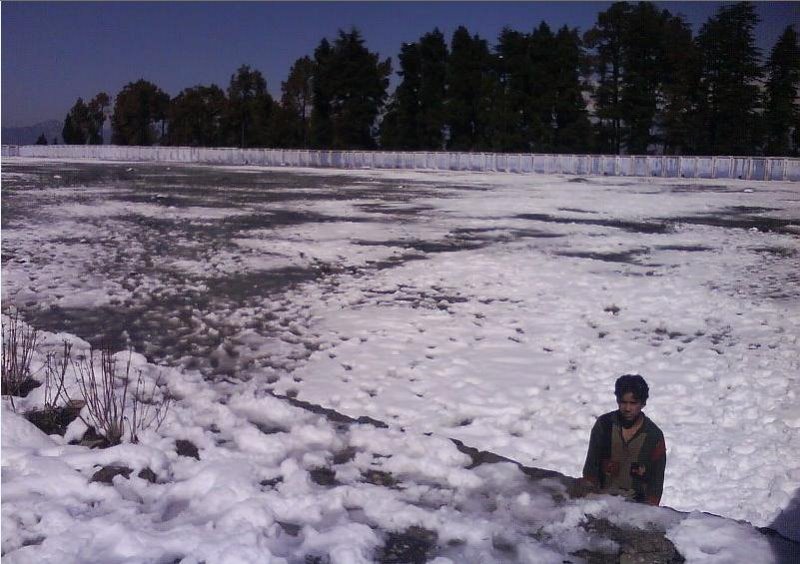
(Snow-fall)

situated in the northern slopesof beautiful Kandolia hill ranges of middle Himalaya, at the height of 1650 meter from sea level. The place became district headquarter of the Garhwal in 1840 A.D., and headquarter of Garhwal division in 1969 A.D.


(A view of Himalaya)

A panoramic view of Snow clad Himalayan peaks of Bandar Pooch, Gangotri Group, Kedarnath, Chawkhamba, Neelkanth, Hathipravat, Nanda Devi and Trishul etc. can be seen from any point of the city.

(Winter)

The main temples of the city are Kandolia Devta, Laxmi Narayan, Kyunkaleshwar Mahadev and Hanuman mandir. Every year, a 'Bhandara' is organized in the premises of the Temple of the Kandolia Devta and thousands of people from Pauri and near by villages participate in it. The city is blessed with a number of picnic spots surrounded by 'Deodar' forests and filled with natural beauty viz. Ransi, Kandolia, Nag Dev, Jhandi Dhar etc.


Accessibility:

Air:
Nearest airport Deharadun.
Rail: Nearest Railhead, Rishikesh 139 kms. & Kotdwar
Road: Well connected by motor road with Rishikesh, Kotdwar, Srinagar and other nearby places.

Thursday, January 15, 2009

Rishikesh


:::Rishikesh; Hrishikesh | Uttrakhandyatra
Rishikesh is a grand center of Pilgrims, tourists and travelers in Rishikesh, this place is situated just 24 kms. From Haridwar to its north direction, and of course bank of The Ganga. This is a residential headquarter of saints and sages. The Himalaya has been spread around this town.


It is to said that when Ribhya Rishi Did hard penances, God appeared by the name of ”Hrishikesh” and this place was henceforth called by the name. situated at the right bank of ganga river, Rishikesh has additional significance being the base for commencing journey to the Himalayan Shrines of Yamunotri, Gangotri, Badrinath and Kedarnath.

Places Of Intrest:-


1- Triveni Ghat :-
     The conference of Ganga, Yamuna, and Saraswati took place here and so it has been called Triveni Ghat. Which is equivalent to Brahama Kund in Haridwar in its nature, character function. The ghat is on the bank of Gangesh where one can merge himself in its holy water. This ghat is surrounded by many temples.


2- Bharat temple :-
     In the heart of Rishikesh city, this oldest temple has been surrounded by massive walls. For this temple it is to say that Bharat ji, the brother of Shri Ram, had mediated here at this place for many years. It has light grey plaster which is pleasing to the eyes. The Mahant of this temple has own large properties in this city and he is well respected by all.

3- Laxman Jhoola :-
     The most artistic Laxman Jhoola Bridge is wonderfully Hanging across the Ganga river. It is 3 km. off from Rishikesh. This is a narrow bridge on which only mules and ponies are allowed to go across.


It is said that Shri Laxman Perform Tapa in this place. The laxman temple is already built for this memory. There was a hanging jute rope bridge till 1989, which was without any pillar. Than this is rebuilt by iron ropes.

On the side of the famous bridges there is well known Raghunathji temple i.e. Shri Rama who is said to visited this place, newly constructed thirteen stories temple is a main attraction in laxman Jhoola in which a large number of statues of Gods and Goddess are visible on every storey.

There are many religious places...please wait for them…..Please write Your comment and suggestions.....

Thursday, January 1, 2009

Haridwar

Hardwar is the door of God, it is also named Haridwar this city is not only 'Door of God' but also door of heaven in the earth. This is the door of God; this city is not only 'Door of God' but also gateway of heaven or paradise. This is the gateway for Himalaya begins and people can go to heaven after having Achieved spiritual redemption. Hardwar is an entrance to meet God and Goddesses. This place is surrounded by natural beauty with pious religious atmosphere; people surrender their self, in front of Gods and Goddesses. It is also known as Gangadwar, Mayapuri, and Kapila as well. It is entry to Char Dham (Four main pilgrimages in Uttrakhand), Badrinath, Kedarnath, Gangotri, And Yamunotri.

        Welcome to DevDwar(Haridwar)-


Hardwar is a district from 9th November 2000, before that it laid in district Sahranpur in Uttar Pardesh, Area of this holy city is 12.032 sq. kms. Situated at the foot of Shivalik Mountains Series and on the right side of the Ganga in the passage make by river. City is located 292.7 mts. From sea level.
The king Swethu penance than Lord Brahma was very happy on his performance and honored him with a boon to make a living place near Brahma-Kund, which was named by Brahmapuri After the name of Brahma. Haridwar has been sanctified by presence of three Gods, Brahma, Vishnu and Mahesh. Lord Vishnu said to have a foot print in upper wall of “Har-Ki-Pauri” where holy Ganga touches it all the times, and it has been called Haridwar. It is also said to that a person can go heaven by getting his salvation after a dip in the sacred Ganga at Haridwar.

         Har-Ki-Pauri-


because of indifferent attitude of Maharaja Daksha son of the Lord Brahma, who did not invite his daughter Sati and her husband lord Shiva from Kailash in his Yagyan(oblation), then Sati went to her Father’s oblation and Shiva insulted there, after that Sati sacrifice herself in yagyan-kund. Therefore the reign of Daksha was destroyed by lord Shiva. Shiva was very angry than he was pacified by Gods, He was granted sovereignty of that place which was named Dakshewara and then it was named Shivapuri, Neelparwat and Hardwar. The place has been named Mayapuri owing to the sacrifice of Sati. Mayapuri has an importance as Sati played her sacrifice role there and this place is home of Gods-goddesses, Rishis-Maharishis and Sadhus-Sanayasis.
One war was fought by Ma Durga with Shumbha and Nishumbha in the Mansa Devi mountain, so there is a temple of Ma Durga, Ma Chamunda Devi also Chosen a Parvat on the west side of Mansa Devi temple, so Chandi Devi Temple is situated in other side of Ganga. Anjani Devi temple is also situated there. The seven Rishis practiced meditation here and pleased to Ma Ganga, so Ma Ganga also comes in the form of seven streams from there seven cottages, the place known as Sapt Sarovar. Ram’s Brother Bharat passed by this place to Rishikesh in Dwapar age, where is situated Bharat Mandir after him. Pandavas also had ascended Heaven from this place after leaving Bhimgoda as a mark.

         people are taking a dip-


about this place great Sanskrit poet Kalidas written in his poetry about natural beauty, hills, mountains and crises-crossed by perennial and seasonal streams flowing down from mountains to the lower regions of land.
during 7th century, the well known Chinese tourist, Hueint Chiang had arrived to Haridwar for a visit of Kumbha Fair. The fair ground was described by him center of Hindu Culture. He had named Myeya-La in Chinese which means Maya Puri in Hindi. Mughal king Akbar came to Haridwar for arrange a ceremonial function at Brahma Kund to emerge the ashes of Maharaja Man Singh in the holy water of Ganga river. Man Singh ki chhatri(umbrella) is situated in center of Brahma Kund. During 14th and 18th century, Muslims demolished Hindu Temples with their Anti Hindi Bulldozers,plundering the public and burning their homes. The damaged image in the Kangra Mandir, built by Raja Ranjeet Singh Sher-E-Punjab, the cracked idol of Bhairava in Bharon Akhara are structural evidence of their. The temple of lord Vishnu near Har-Ki-Pauri is in such a deplorable condition that it can not be distinguished. In Jwalapur there is a mosque is also ruined condition which is evidence. Najib-Ud-Daula from Najibabad several times raided this place whenever he wished.

        One saint is meditating in the circle of Fire-


::Guru Nanak Dev Reached This Place::
Guru Nanak Dev reached this place for his doctrinal explanation to the people. Guru Saheb endeavored to eliminate hypocrisy of hypocrites by preaching his wisdom. He stayed in Nanakbara. Guru Saheb Amardasji also visited this place during his religious preaching. Guru Saheb Nanak Dev remarked that ”The water sprinkled by him would not reach even to his wheat field in Punjab from here, then how could it reach the forefathers dead long ago and now said to be in heaven?”

        Human body and Soul meeting with God and getting way of heaven-


In the middle of 19th century, Lord Dalhousie and Lord Aukland, the Viceroy of British India had also admired the sanctity of Hardwar and were so much impressed by supreme importance of the place, that a plan was engineered for construction of the famous Ganga Canal which was inaugurated by Viceroy Lord Dalhousie in year 1854.The propellers of the sinking boat of Hinduism from the darkness of ignorance were Swami Deanna SiSwati and Mahatma Shradhanand who also visited Haridwar. Later on Gurukul Kangri a center of Hindu culture was founded which is presently managed by Arya Pratinidhi Sabha Punjab, from time to time to this place is being visited by ex-rulers of Indian states and the rich and poor people of this great country, their devotion to the holy.

Wednesday, December 31, 2008

Shri KedarNath

Kedarnth is a holy town in Devbhumi Uttrakhand (Land Of God) located in Rudra Himalayan range, about 3584 mts. above sea level near Mandakni river and it's laid by snow capped Himalayan peaks, it is one of the twelve Jyorilingas. the shrine of Kedarnath is amongst the holiest pilgrimages for the Hindus. It is named after King Kedar who ruled in the Satyayuga. He ruled the seven continents and was a very saintly king. Temple is over thousand year old is built of massive stone slabs over a large rectangular platform. The present temple was built by Adi Guru Shankaracharya in the 8th century.


(Shri Kedarnath ji-Om Namah Shivaya)

This temple is dedicated to lord Shiva, said to be 1000 years old, built of heavy stones which have gray color, it is really wonder that how people manage to bring theses heavy stones, and how they lift them for temple’s wall on these days. The temple has a ”Garbha Griha” for worship and a Mandap for devotees. A conical rock is worshiped inside of the temple in Shiva and Sadashiva form, and there is a very large Nandi Mandap, Pardakshin path is worshiped as lord Shiva and there are many idol and small temples on the outer of the place.


(Himalayan range)

Kedarnath is situated in Uttrakhand; it is very close to Indo-Chinese border. It is the source of Mandakini river. It is couched in the scenic locales of the Garhwal Himalayas at 3583 meters above sea level, which is around 11630ft. and 14 kms. Trek from Gaurikund.
It is very cold in the winters with the ground being covered with snow. In the summers, the mercury barely crosses the 20°C mark. The place experiences about 150 cm of rainfall during the monsoons and so the best time to visit is between May and October. Kedarnath is near to Rishikesh (234 km) And Dehradun (250 km).


(Trek rout for Kedarnath)

The Shiva Pinda is one of the twelve Jyotrilingas of the Shiva. In the temple morning Puja is called Nirwan Darshan and evening puja called Sringar Darshan. The Morning Pujas are Shubh Parbhat, Balbhog, Mahabhishek, Rudrabhishek, Ashotar, and shiva puja. And the evenings pujas are Shiva Ashtotar, Shiva Sahasranam, Shiva Naamawali, Shiva Mahimaman Stotra and Ekanta Seva. The opening date of the temple usually falls during the last week of April and temple close after Diwali festival. Some Pandas of Kedarnath are Scholar of Sanskrit, they lived near by Kedarnath like Guptkashi, Ukhimath and local villages.

(Oh! God It is Really heaven made by You…..)

Kedarnath is surrounded by Gandhi Sarovar, Vasuki Tal, Bhairon Nath Mandir, ”The Samadhi of Adi Guru Sankaracharya is visible there”.


(Shankracharya’s Samadi)

Adi Guru Shankaracharya chosen this land for lord Shiva’s shrine, where unholy becomes holy and holy becomes holier.

Panch-Kedar will be published soon.......

Saturday, December 27, 2008

SomeThing Special About Uttrakhand


कुल भौगोलिक क्षेत्र फल- ५११२५ वर्ग किलोमीटर पर्वतीय क्षेत्र- ९२.५७%

मैदानी भाग - ७.४३%


वन क्षेत्र - ६३%

कुल जनसंख्या -८,४७९,५६२(२००१ जन गणन के आधार पर)

पुरूष महिला अनुपात --१०००:९६४

पुरूष -- ५०.९०%

महिला - ४९.१%

चार मुख्य शहरों की जनसंख्या

देहरादून- ५३०,२६३

हरिद्वार- २२०,७६७

हल्द्वानी- १५८,८९६

रूडकी - ११५,२७८

साक्षरता -- ७२%

कुल गाँव -- १५६२०

रेल वे स्टेशन- कोटद्वार, देहरादून, हरिद्वार,ऋषिकेश, हल्द्वानी, लाल कुआँ, काठगोदाम, रामनगर, रूडकी,

टनकपुर, लक्सर।

एअरपोर्ट- जौलिग्रांत, पन्त नगर, गौचर (helipad), nainisen.

कुल शहर - ८१


मुख्य पर्वत चोटिया -नंदा देवी, कामत, बद्रीनाथ,चौखम्बा, त्रिशूल, दुनागिरी, पंच्चुली, नन्दकोट,गंगोत्री,

गौरी पर्वत।

राज्य पुष्प-- बरह्म कमल


राज्य पक्षी- मोनाल ( हिमालयन)


राज्य पशु- कस्तूरी मिरग


राज्य वृक्ष -- बुरांस (Rhododendron)


Wednesday, April 9, 2008

NANDA DEVI RAJ JAT

NANDA BHAGWATI, the Isht-devi of garhwal and kumaon, Nanda devi raj jat is an important event of garhwal. "nanda raj jat"a nanda is a goddess. and raj jat means royal journey , actually nanda devi raj jat is an event for journey with goddess. the royal family of garhwal conduct the nanda raj jat to please the devi Nnda Bhagwati, in order to seek blessings for happy and prosperous kingdom and the deficit of their enemies. Nanda Devi's relationship with the people is just the same as that of Sita with Mithila.

Gaura is known as the daughter of uttrakhand or daughter of mountain Hiamalya or Himvat, married to the a person who wear leoperd skin , yogi Hindu God Shiva, the God of destroyer. in uttrakhand popularly believed that the goddess visit her mother place(Mait) on Krishan Paksh Bhadon
(2nd week of august). the people of garhwal and uttrakhand celebrate Nanda-Ashtmi, ther are many tample of MA NANDA BHAGWATI.


the event is her maiti(mother's home's people),escort her in a procession to her Sauras or sasural (husbands home in Kailash).procession starts from her mait to sauras. maha raj jat comes after twelve years, and it repalced from hornkund from the tample Nanda Devi,with Birs of Nanda Devi, other God(devtas), also with he Goril Dev of Kumaon and the Lattu Dev of Bandhan are the prominent devtas. with LINGALA CHHANTOLI (special umbrella prepared by local handicrafts).
According to the history the Jat started by
ancestors of the king of Garhwal. The ancient tradition of taking out Nanda Jats among all the Garhadhipatis(kings of garh), was combined by the Raja into a Royal pilgrimage every twelve years. KIng Ajay pal started the jat on 15th century, Since then, the royal family takes the pilgrimage along with their , purohits to seek forgiveness from Nanda Devi, and offer 'Tarpan' for the ancestors who had died at the Roopkund, along with his pregnant wife and courtesans.
However, Carbon 14 dating of the skeletons, done by Crane and Griffin in 1958 proved that the bones found were between, 500 to 800 years old. After the programme for the yatra is chalked by the Kunwars, the prince of Kaunsuva arrives in Nauti to seek the blessings of the goddess and to organise the Jat(yatra).He brings offerings including the Ringal- Ki- Chhantoli, and a four horned ram, which becomes the seat of the idol of the Nanda Devi and is made of gold.

Being the Isht- Devi of the kings of Garhwal the Raj Jat initiates at Nauti. The sub-clans, based on the names of the villages, are fixed as the Chhatolis, who on reaching the next village (Chhantoli in red circle:above picture)

meet the Chhatolis reach the village after covering the pre-set route.These meetings are decided prior to the initiation of the Yatra which are as follows :

  • Chhatoli of Lord Lattu of Bagoli (Brother of the Devi)
  • Chhatoli of the Raj Jat
  • chhatoli of Dewan Khandoori
  • Chhatoli of Barhatkoki
  • Other Chhatolis(many god and goddess)

The Raj Jat does not confine itself only to Garhwal, but to the entire India. This is 18 day long Yatra, spreads the fragrance of customs and traditions of the Garhwal- Kumaon region. The arrangements at the camp set up, are done for the devotees taking care of their requirements during the torturous journey.

  1. Raj Jat Yatra from Kurud
  2. Kurud to Ustoli
  3. Ustoli to Bhenti
  4. Bhenti to Dungari
  5. Dungari to Soona
  6. Soona to Koti
  7. Koti to Nandkeshari

At Nandkeshari, the last stage of the Raj Jat Yatra, it merges with that of the Yatra originated from Nauti, and ends at Homkund. The devotees after the Raj Jat return by the following route:


  • Homkund to Sutol
  • Sutol to Kanoal
  • Kanoal to Wan
  • Wan to Mundoli
  • Mundoli to Lavani
  • Lavani to Bulgurar
  • Bulgurar to Purna
  • Purna to Chidiga
  • Chidiga to Vijaypur Sera
  • Vijaypur Sera to Talwadi Thala
  • Thala to Devrada


four-horned ram


At Devrada, prayers are offers for a period of six months, before the devotees start their journey back to Kurud.


The festivities come to a standstill, when the time comes for the Devi to leave for her sauras (husband's home). Special prayers and rituals are performed and the offerings are loaded on the four- horned Ram just like the things given to a daughter in her marriage are sent. The deity is decorated like a bride, ready to leave for her husband's home. The scene becomes pathetic when the devotees, in tears, bid farewell to the Devi, as if they are bidding farewell to their own daughter. Leaving the image of the Goddess there, the four-horned ram proceeds towards Kailash (Trishuli peak) the abode of Lord Shiva on its own. The trishuli peak is the highest peak of the Nanda Parbat, the highest mountain range in Chamoli district. The parbat, is revered by the people, the women folk believe that the mist around the Nanda Kot peak is the smoke coming out of the kitchen of Goddess Nanda. They get sentimental while they sing songs associated with their revered Goddess, whom they regard as a pampered daughter of their own.


Monday, April 7, 2008

THE BADRINATH


BADRINATH is a pious place in chamoli district, in uttrakhand, its one of the femous and most CHAR DHAM pilgrimage. situated in left bank of ALAKNANDA river, and between the Nar and Narayana mountain ranges, Badrinath is located 301km from rishikeh.
Badrinath was established by aadi shankaracharya in the ninth century. we can see about the Badrinath in SRIMAD BHAGWAT(3.4.22), its describes "there is a badrika asharam of supreme of the GOD (VISHNU).
Jagadguru Shankaracharya saw a stone in the Alaknanda river that was made by Saligram(black stone), he saw badri narayuan's statue in that stone, he took that stone(nurty) to a cave that is in tapt kund, than garwal's king expended the tample and place the mury there in 17th century. in the 1803's himalayan earthquake it was rebuilt by jaipur's king again.
The temple is approximately meters tall with a small cupola on top, covered with a gold gilt roof.The facade is built of stone, with arched windows. A broad stairway leads up to a tall arched gateway, which is the main entrance. The architecture resembles a Buddhist temple, with the brightly painted facade also more typical of Buddhist temples. Just inside is the mandapa, a large pillared hall that leads to the garbha garha , or main shrine area. The walls and pillars of the mandapa are covered with intricate carvings.

There is a mythological legend, according that, when the Ganga was requested to descend to earth to help suffering humanity, the earth was unable to withstand the force of its descent. Therefore the mighty Ganaga was split into twelve holy channels. Alaknanda was one of them that later became the abode of Lord Vishnu .

one another Legend has it that Lord Vishnu came to the area, called ‘Badri Van’, or the berry garden, to meditate after Narad rebuked the Lord for being immersed in worldly pleasures. The main deity is a meditating Lord Vishnu.

The temple of Badrinathji on the banks of the Alaknanda river. Situated at an altitude of 3,133 mts., the present temple is believed to have been built by Adi Guru Shankaracharya- an 9th century's he was a philosopher-saint, who also established a 'math' here. Also known as 'Vishal Badri', Badrinath is one of the Panch Badris, situated in uttrakhand.
According to the skanda purana "There are several sacred shrines in heaven, on earth, and in hell; but there is no shrine like Badrinath."

There are five other BADRIES known as PANCH-BADRI:-
  • Yogadhyan Badri (1920 m.)
  • Bhavishya Badri (2,744 m.)
  • Bridha Badri or the 'Old Badri'
  • Adi Badri
and fifth one is BADRINATH itself


The main sanctum comprise of the:-

* Swambhoo Saligram Shila (self originated black granite) idol of Lord Vishnu (also known as Lord Badrivishal) the only of its type,sitting in padmasan posture,is prayed since time immortel here.

* Idols Nara and Narayana the 9th twin incarnation of Lord Vishnu,the preachers of Sanatan Dharma in which Sri Narayana is in meditating posture and Sri Nara standing with his bows and arrows in his hands continuing their meditation for one Kalpam(1000 Chatur Yugas)

* Kubera the treasurer of Lord,the preserver of all worldly wealths and the king of Yakhsas.Who owns Alkapuri,the land of wealth and the first space chariot namely Puspaka.

* Garuda, the carrier of Lord.

* Udhava,the only surviving Yadava, the companion of Lord Krishna, the minister of Vrishni Dynasty,the only disciple of Brahaspathya the Lord of justice,the great intellectual who was been directed to reside at Sri Badrinath in his ever presence by Lord Krishna.

* And the Saint Narada,the priest of the Lord for winters,are been prayed here.

* Sri Mahalaxmi the goddess of prosperity,has her shrine in the temple premises,who is cosidered at the service of the Lord and cooking his food.

*Ghantakarn,the kshetrapal,the protector of Badrinath.

* Lord Ganesha and Lord Hanuman have also had their shirnes in the temple surroundings.

The present pooja system at Sri Badrinath was organised by jagadguru Sri Shankaracharya during his pilgrimage about 1200 years back.He has also deployed various right holders and chief priest from Kerala Namboodri families known as His Holyness the rawal of Sri Badrinath.Since this landscape of Badri belongs to their Kingdom,the temple was managed by the King of Tehri. In the year 1939 the administration was handed over to the interim government.